
There’s a lot to digest in the proposed 2027 Physician Fee Schedule (PFS), but changes to Remote Physiological Monitoring (RPM) and Remote Therapeutic Monitoring (RTM) are getting the most attention. This should not come as a surprise; over the last few years, the industry has grown 10-20x. Medicare spent $500MM on RPM in 2024, kicking off a major audit from the HHS Office of the Inspector General.
We’ve largely stayed out of the fray, because we believe that while RPM and RTM have a place, the foundation needs to be continuous, wraparound care and support for patients between visits. Devices and data monitoring can produce helpful signals to guide that care, but those programs must come on top of high-quality care management that fosters longitudinal patient relationships.
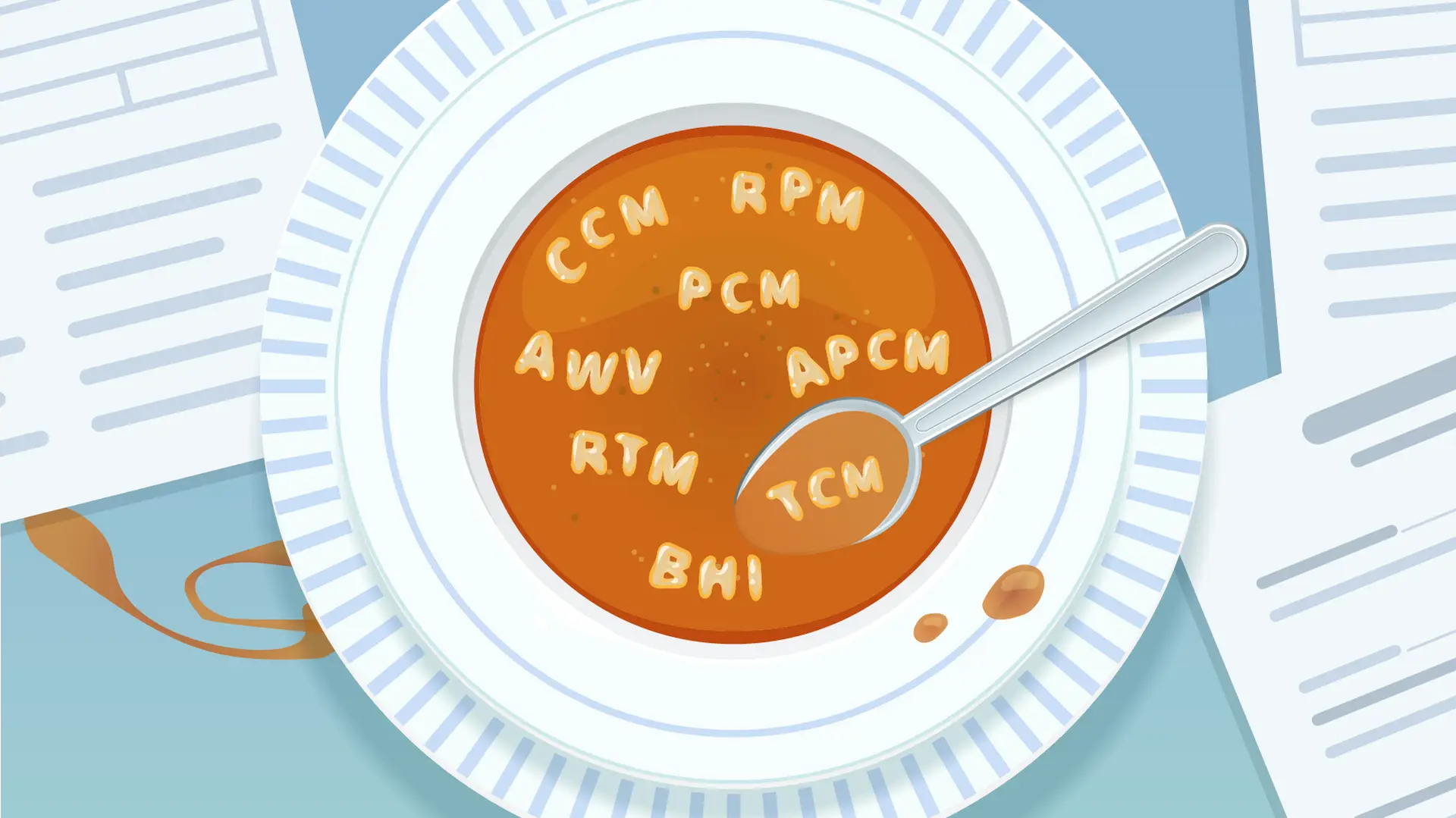
Here’s a short review of the 4 major changes and their potential impact on organizations with large RPM/RTM programs, along with a recommendation for how you can maintain continuity of care and a stable revenue stream. Ultimately, it’s time to stop worrying about an alphabet soup of programs and start thinking holistically about how to deliver high-quality, wraparound care between visits.
If these recommendations make it into the final rule, organizations with large RPM and RTM progams could face serious care delivery issues and financial pain (on top of everything else that will hit in 2027).
Why: In a major recent audit, OIG found found that some practices did not have a prior relationship with patients. CMS believes this is necessary for a practitioner to interpret RTM results and manage the patient.
Impact: Low impact to organizations with effective compliance functions; this policy targets medical groups that are not so rigorous about ensuring all patients are established.
Physicians or other practitioners must provide a separate initiating visit at the onset of RTM or RPM services. This visit must be face-to-face (in person or telehealth), assess appropriateness of RPM or RTM, and get patient consent.
Why: Again, this ties back to the OIG audit. CMS believes a practitioner should know the “current medical status and needs of the patient prior to ordering … services … and use the results of remote therapeutic monitoring to manage the patient under a specific treatment plan or therapy plan of care.”
Impact: Significant; just having an AWV in the past year is not enough. You will need to schedule each new patient for this appointment and ensure their physician or APP appropriately documents clinical appropriateness of RPM or RTM.
Four new HCPCS G-codes replace the 17 existing billing codes for both RPM and RTM. For each service, there will be a code for initial set-up and patient education, and a monthly code for remote monitoring and care. Treatment would require 2 or more days of data submission and 20 minutes of service time, with at least one real-time interactive communication.
Why: OIG raised issues of patients not receiving all required services, and CMS was concerned about the administrative burden of numerous codes. CMS also wants to reflect the actual cost of service delivery.
Impact: Likely significant; we can assume CMS will try to bring down the overall cost of these programs with the new billing structure.
Payment will only be allowed for services performed by directly employed clinical staff, not contractors. However, neither staff nor patients need to be on-site.
Why: One of the reasons we’ve stayed away from RPM and RTM is the proliferation of vendors who do not truly behave as extensions of the care team. Based on the OIG audit, CMS has concerns over third parties cold-calling patients and care provided online or via telephone by staff who have “little to no relationship” to the patient with “insufficient involvement and oversight of the billing practitioner” without all service requirements being met.
Impact: High. If this proposed rule goes through, you’ll need to insource actual patient care and rely on your vendor for tech and logistics only. (That’s assuming your vendor is able to stay in business.)
CMS is collecting comments on the proposed rule, and we will likely see changes in the specifics of the RPM and RTM payment rules between now and the end of the year. (I expect frenzied lobbyists have already descended upon our nation’s capital.) But the direction is clear: CMS is taking aggressive action in response to the OIG audit.
If you have a significant RPM or RTM program — especially one that is outsourced — you need to act now to protect your ability to manage and monitor your patients between visits (and the associated revenue stream).
Now is the time to build a sustainable foundation of proactive care management. If CMS pulls back or delays some of the proposed changes, you’ll have an even stronger ability to deliver patient care and a better financial position. But if the proposed changes do go through for 2027, you will have mitigated your risk.
We believe there are better programs that can fund high-quality, wrap-around care at scale, across fee-for-service and value-based models. I want to make sure you know about one of them in particular. Advanced Primary Care Management (APCM) can fund this work now and set you up for success in the transition to value-based care.
The models may evolve, but the goals stay the same: comprehensive primary care that improves outcomes and reduces cost. And right now, APCM is the best opportunity for your organization to build out those primary care capabilities.
Most medical organizations are unfamiliar with the details, but done well it can offer broad and significant clinical benefit and a net operating income of $2.4 million per 10,000 patients annually.
And “done well” is the key point here; you don’t want to just be doing check-the-box APCM. A thoughtful program can be truly transformative and provide the financial sustainability that will get you through the economic volatility we see coming in 2027.
I’m going through all the details in a series of short, focused webinars; you can sign up for the series and access a host of other resources here.
For over a decade, we’ve seen Chronic Care Management (CCM) as the true anchor for between-visit care. CCM builds a long-term relationship with your patients to drive clinical outcomes and serves as a foundation supporting other initiatives like patient education, advance care planning, RPM, RTM, etc.
This program has been around since 2015, but it is still underutilized by many specialty groups. Historically, many have found it too hard to stand up a program and run it consistently for all the patients who need it, or they haven’t bought into the clinical value of a 20-minute call once a month. The juice just hasn’t been worth the squeeze.
The good news is that there’s a modern way to do CCM, where patients get continuous communication throughout the month and care managers can effectively and efficiently support large panels. Whether you run a program in-house or with a trusted partner, you can now scale a program across all your patients with chronic conditions. Important to know: given how important remote monitoring can be for certain specialties and conditions, you can still do this work under the CCM program.
Either program offers a meaningful foundation of care that will enable you to engage patients continuously, intervene early, and drive better outcomes — all while being self-funded. For a more personalized look at how you can you mitigate your risk around RPM/RTM going into 2027, I invite you to reach out to my team.

Darshan has 15+ years experience co-founding and building high growth healthcare technology businesses committed to improving access to care and quality of care. More about Darshan…